
Firearms & Gear
It Depends on the Mission: Choosing the Right Pistol for the Job
There is no universal best pistol. There is only the one that fits what you are actually being asked to do.
July 5, 2025 · 4 min read
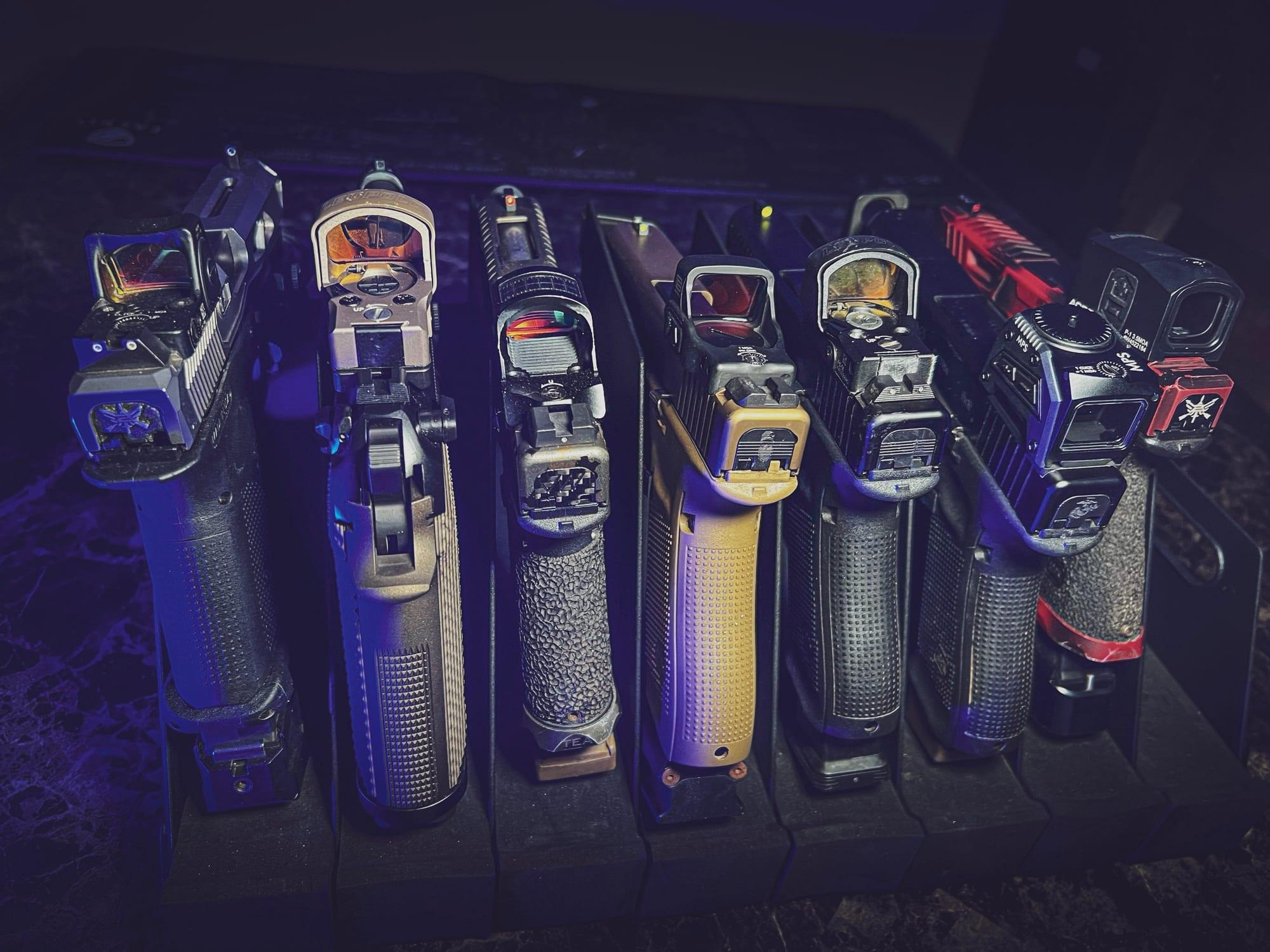
Walk into any gun store or scroll through a firearms forum and you’ll see the same question repeated endlessly: “What’s the best pistol?” It’s a fair question—but it’s also the wrong one. There is no universal “best” pistol. The right choice depends on mission, environment, body mechanics, and intended use. This article breaks down how to evaluate pistols based on purpose, ergonomics, caliber, and performance, and offers practical recommendations for duty use, concealed carry, and competition.
The Popular Narrative
Most people approach pistol selection like this:
- One brand
- One model
- One answer for everyone
That mindset usually leads to buying what’s trendy, what someone else runs, or what looks good behind a glass counter. Unfortunately, pistols aren’t fashion accessories—and the wrong choice shows up fast under stress, concealment, or long training sessions.
The Reality (Professional Perspective)
The “best” pistol is defined by mission requirements, not marketing or popularity.
- Purpose matters
- Hand size matters
- Caliber tolerance matters
- Training habits matter
A pistol that excels in competition may be a poor choice for daily carry. A duty gun that thrives on a belt may be uncomfortable or impractical to conceal.
Once you start evaluating pistols through the lens of use-case first, the noise fades quickly.
What’s Missing or Misunderstood
1. Purpose Drives Everything
A pistol for duty, concealment, or competition solves different problems. Expecting one gun to dominate all three roles usually leads to compromise.
2. Fit Beats Brand
Grip ergonomics, reach to controls, and natural point of aim matter more than logos. A pistol that fits poorly will always underperform, no matter how reputable the manufacturer.
3. Bigger Isn’t Always Better—and Smaller Isn’t Always Smarter
Subcompacts conceal well but are harder to shoot. Full-size pistols shoot well but demand space and support. Balance is key.
Key Factors to Consider When Choosing a Pistol
Purpose of Use
- Duty use prioritizes reliability, durability, and consistency.
- Concealed carry emphasizes size, weight, and draw efficiency.
- Competition demands recoil control, accuracy, and speed.
Hand Size and Grip Ergonomics
Hand size directly affects control and comfort.
Small hands benefit from shorter grip circumferences and slimmer frames, such as the SIG P365 or Glock 48.
Medium to large hands typically perform better with full-size pistols like the Glock 17, HK VP9, or CZ Shadow 2.
Caliber
9mm remains the most versatile option—manageable recoil, affordability, and capacity.
.40 S&W and .45 ACP bring more recoil and less capacity, often driven by agency requirements or personal preference.
.22 LR is ideal for training and competition practice, not defense.
Specialty calibers like 10mm or .38 Super fill niche roles in outdoors defense or competition.
Size and Weight
Subcompact pistols favor concealment.
Compact pistols strike a balance between shootability and concealment.
Full-size pistols excel in duty and defensive roles.
Competition pistols favor longer barrels and heavier frames for recoil management.
Best Pistols by Category
Duty Use
Reliability and durability are non-negotiable.
- Glock 17 Gen 5
- SIG Sauer P320
- Walther PDP Full-Size
- HK VP9
9mm is preferred for cost efficiency and capacity. Full-size frames offer better control under stress.
Concealed Carry
Concealability, reliability, and consistent draw matter most.
- SIG P365 XMacro
- Glock 48 MOS
- Springfield Hellcat Pro
- Smith & Wesson M&P Shield Plus
9mm remains the standard. Choose based on hand size—smaller pistols may challenge shooters with larger hands.
Competition Use
Speed, recoil control, and trigger quality dominate.
- CZ Shadow 2
- Staccato P or XL
- Walther Q5 Match Steel Frame
- Glock 34 MOS
Grip comfort, slide tracking, and trigger break become critical over long shooting strings.
Practical Implications
For New Buyers
Avoid chasing trends. Identify your primary mission first, then select a pistol that supports it.
For Experienced Shooters
You may need more than one pistol. That’s not indulgence—it’s specialization.
For Training
No pistol compensates for poor fundamentals. Choose something that encourages practice, not frustration.
Key Takeaways
- There is no universal “best” pistol.
- Mission dictates equipment.
- Fit matters more than brand.
- Test before committing whenever possible.
About the Author
Kawa Mawlayee is a former U.S. Army Special Forces Green Beret and founder of 2Alpha Training Group. He focuses on real-world application, decision-making, and equipment selection grounded in mission requirements and practical experience.
Final Thoughts: Fit Over Flash
The right pistol fits your hand, your body, and your mission. If you carry daily, prioritize concealment. If you defend home or serve professionally, prioritize reliability. If you compete, prioritize control and performance.
The right choice isn’t what everyone else is running—it’s what works for you.
Kawa Mawlayee Founder, 2ATG